Where do you want to go? Transportation
and accommodation in Russia
In this longread, we will take an in-depth look at all aspects of transportation and accommodation in Russia. Get our hands-on tips, memos, hints, and links to the best resources to help you out. Whether you are a student, expat or visiting professional, this comprehensive article will become your indispensable guide to transportation infrastructure and real estate in Russia!
Page navigation:

Urban orientation
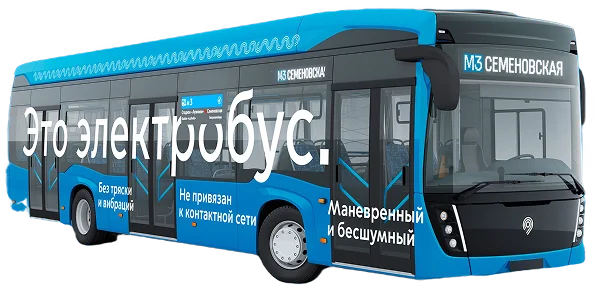
Each point on the map of Russia is a unique place. In time you’ll learn everything about the country’s geography, climate and landscape, become familiar with the infrastructure (streets, squares, houses, buildings, educational and medical institutions, sports facilities, monuments), adapt to the environment and easily meet and communicate with people around you.
How to get to the right place
Welcome to Russia! A huge country that is hard to travel all over even on wheels! In contrast, a walk around the city is a sightseeing pleasure and healthy activity available to everyone.
The location-based services may differ, but they all provide lots of handy features that will make navigating your new place convenient and efficient. The benefits speak for themselves:
-
1
Precise directions and real-time navigation. Services provide detailed route information and recommend transportation modes. With GPS tracking, the apps guide you around with voice prompts. The directions update in real time, even if you take a wrong turn or get lost.
-
2
Search for places and organizations. The services provide information on any organizations, their contact details, and working hours. A “Search nearby” type of features will allow you to find institutions or attractions that are located in close proximity to your current location. It’s a perfect way to do spontaneous walks and explore the neighborhood.
-
3
Reviews and Ratings. Take the time to study reviews. The feedback of other users might help you decide on places to visit or to have a meal.
-
4
Offline maps. Many apps allow downloading the maps for offline use, which comes especially handy when Internet access is limited, or in areas with low signal level.
-
5
Multiple languages. The availability of different languages in the apps eliminates the language barrier.
Apart from general navigation services, there are specialized apps for tourists in different cities. Thanks to applications like “Uznai Moskvu” (Узнай Москву) and “Mosty Peterburga” (Мосты Петербурга), you can get information about sights in Moscow or schedule a visit to the opening of bridges in St. Petersburg.
The role of diasporas in adaptation

When changing residence, as well as when traveling, it is important to be well-informed about the society and the location.
Many people use a guide, take a tour, or look for sightseeing itineraries online. If you are primarily interested in employment institutions, housing, government agencies and public services, diasporas are communities where migrants meet people from their home country, share experiences and support each other emotionally.
Diasporas are known to arrange such events, as language and professional training courses, and provide assistance in finding a job. They can also provide temporary housing, food and clothing to migrants in need. One can feel a closer connection to their culture and homeland within such communities. Needless to say, that diasporas contribute to preserving the cultural identity of a multinational Russian society. Diasporas can represent the interests of migrants in local authorities and other organizations. They advocate for the rights of migrants.


Prior to coming to Russia, check with the consulate, on the Internet, or with those you know who have already moved to the country to locate the closest commonwealth center, or a community of people from your country. The examples thereof are “Kyrgyzy v Moskve” (Кыргызы в Москве), “Tajiki Rossii” (Таджики России), “Uzbeki v Sankt-Peterburge” (Узбеки в Санкт-Петербурге), “Uzbekskiye Diaspory v RF” (Узбекские Диаспоры в РФ).
Some cities have their diaspora directories that contain contact information. For example, such a directory exists in the Tomsk region: diaspora directory.
Public transportation used by Russians
During a long residence or living in Russia, you will surely need to use transportation. Don’t worry if you don’t have your own car, as there are many types of public transport in Russia. The fares are very affordable, and the schedules are regular.
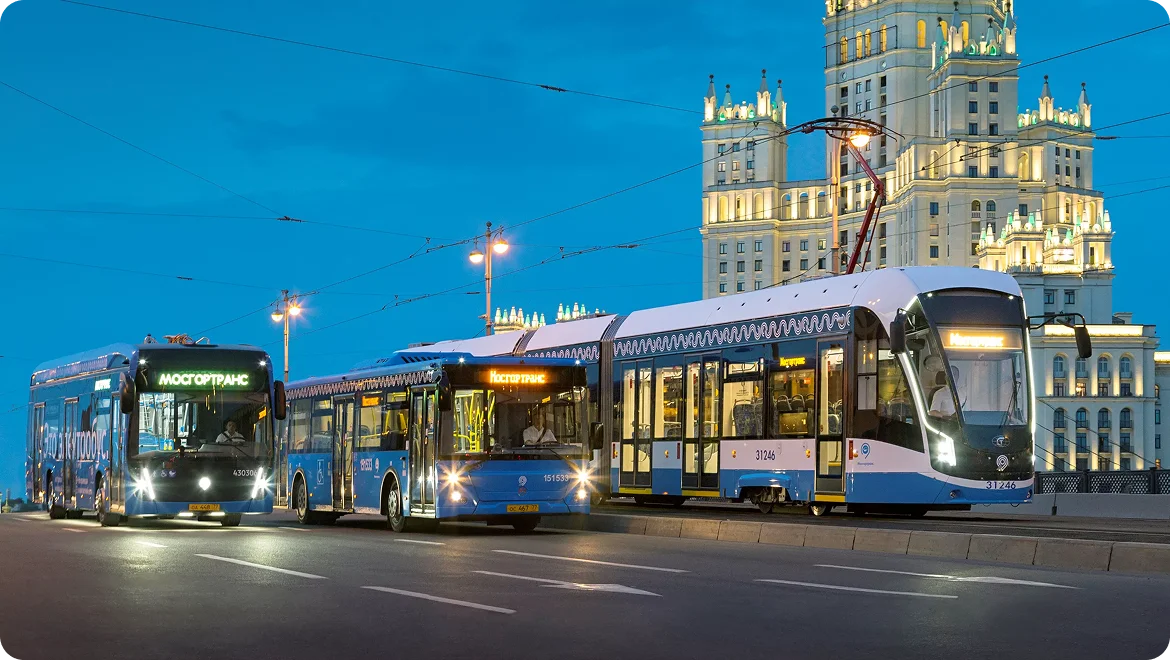
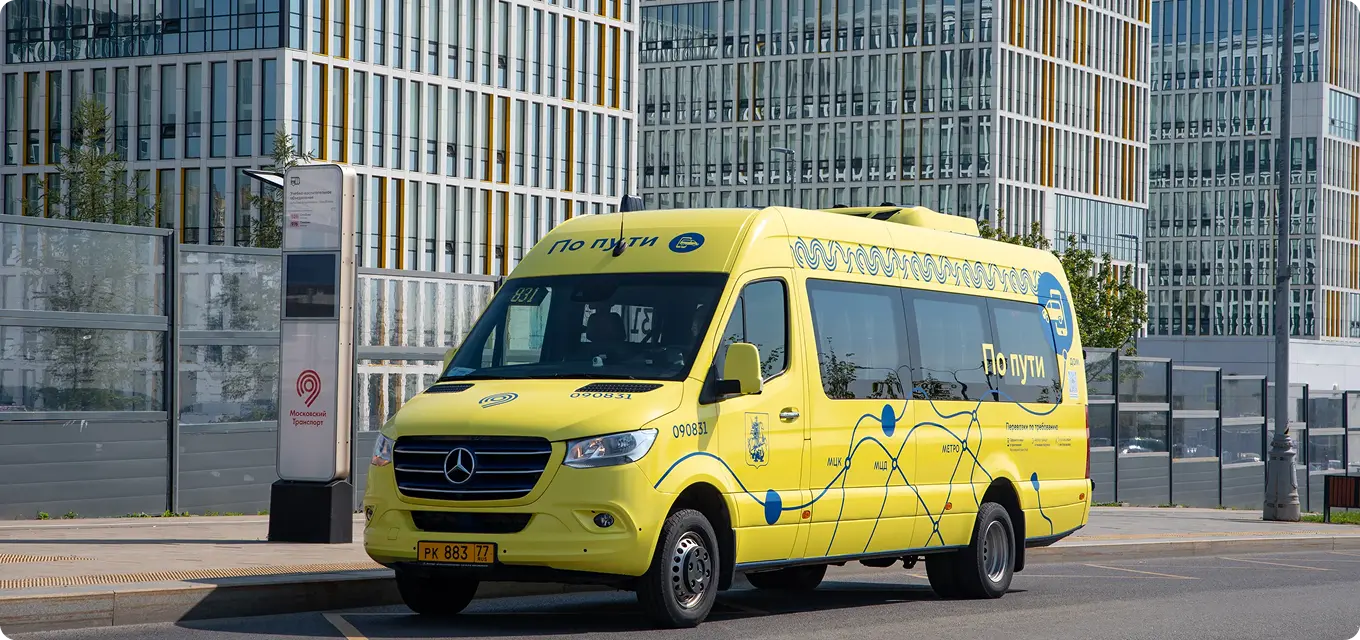
Ground transportation is represented by buses, trolleybuses, streetcars, minibuses (the so called “marshrutkas”) and taxis. Buses (city and commuter buses, minibuses), trolleybuses, and streetcars are common for medium- and large-sized cities. The smaller cities and towns more often have buses only. The typical time table intervals are between 10 and 30 minutes. You can also refer to a schedule in most cases. Buses, trolleybuses, and streetcars pick passengers up and drop them off at stops. Route numbers (sometimes endpoints and key stops) are indicated on a signage.
Marshrootka
To some the route system of marshrootka may look unusual. They are buses or minibuses that ride along specific routes, that typically differ from the routes of traditional municipal buses. In addition to the stops specific to their routes, you can also board them at usual public transportation stops. In some cities you’ll have to raise your hand to board, as you would do when catching a cab. The gesture looks like this: arm extended out to the side, parallel to the ground.
Russian subway
A fun fact
“Admiralteyskaya” (Адмиралтейская) station in St. Petersburg and “Park Pobedy” (Парк Победы) in Moscow are ranked 3rd and 4th among the deepest subway stations in the world.

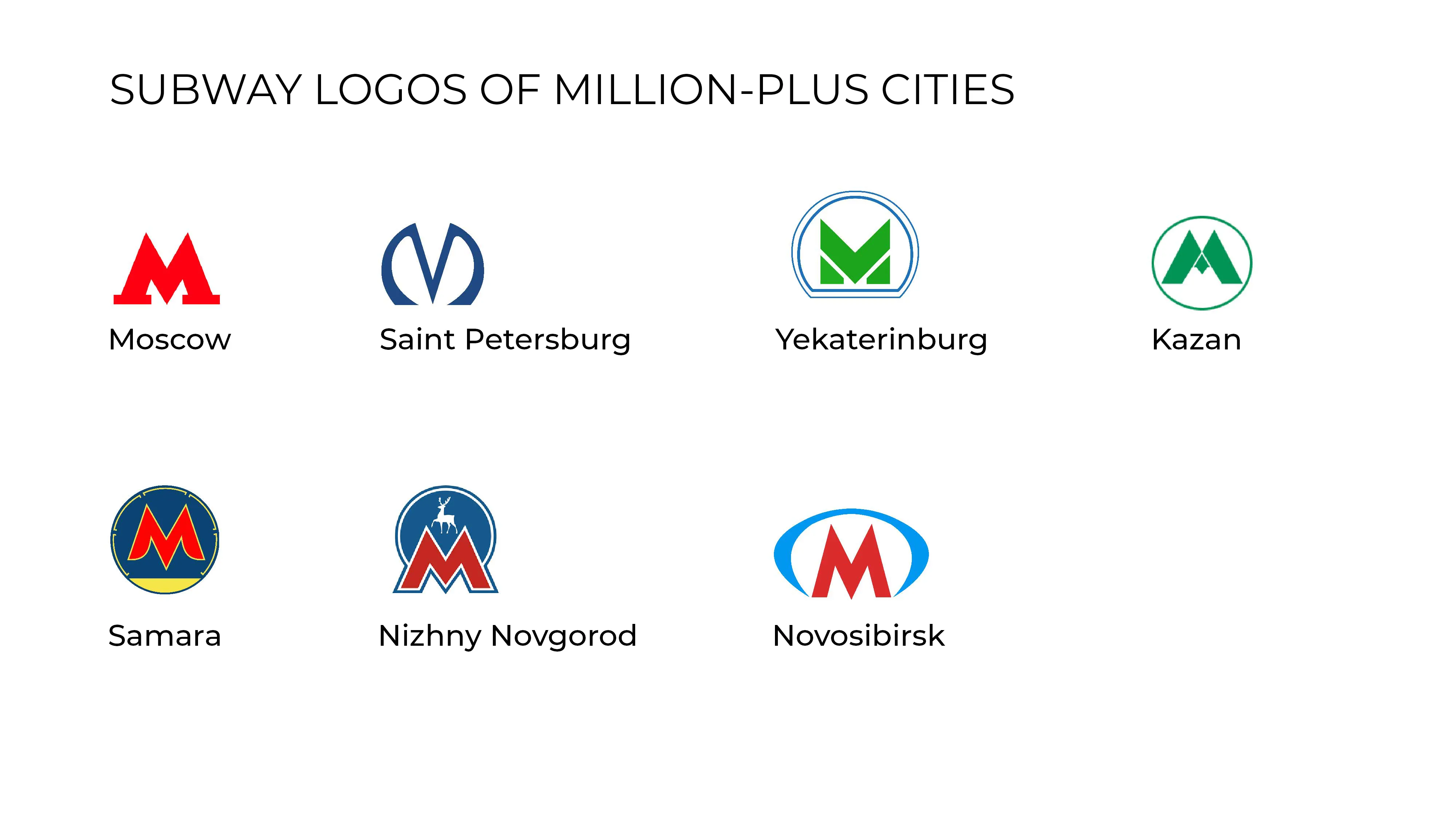
The aesthetics of Russian subway station design deserves special attention. Many stations are architectural masterpieces of their era.
-
1
Stalinist neoclassicism During the post-war reconstruction period (1945–1953), the Soviet Union stepped into the era of Stalinism, which is vividly represented in the Moscow’s subway architecture. Stations of this style are grand, and feature high ceilings, marble walls, bronze chandeliers and sculptures. Classic examples are “Komsomolskaya” (Комсомольская), “Маяковская” (Mayakovskaya) and “Ploshchad Revolyutsii” (Площадь Революции) stations.
-
2
Art deco and constructivism. In the 1930s and 1940s, the Moscow subway embodied the principles of art deco and constructivism. They are represented by geometric patterns, embossed panels, glass walls, and bright colors. “Novoslobodskaya” (Новослободская), “Маяковская” (Mayakovskaya) and “Arbatskaya” (Арбатская) stations are great examples of art deco and constructivism styles.
-
3
Modern architecture The subway stations of recent decades reflect modern design and technology trends. Glass, metal, and the play of light are the key features of this style. Examples of modern stations in Moscow include: “Delovoi Tsentr” (Деловой Центр), “Troparyovo” (Тропарёво) and “Salaryevo” (Саларьево).
-
4
Neoclassical and retro Some subway stations stay true to classic styles and combine neoclassical and retro design. These stations are usually decorated with mosaics, murals, arches and columns, giving them a sophisticated and elegant look. Classic examples are “Kurskaya” (Курская), “Smolenskaya” (Смоленская) and “Arbatskaya” (Арбатская) stations.
Each style of Russian subway reflects not only the architectural heritage of its time, but also the beauty and uniqueness that make riding the subway a magnificent journey through the history and culture of Russia.
Fares cost and payment
In Russia, fares are established by the local authorities. The fares of different modes of transportation differ, and may also depend on the time of day.
For example, in the city of Tomsk a bus ride costs 32 rubles, while a tram or trolleybus ride costs 30 rubles (January 2026).
How do I pay my fare?
Fares are paid in cash or by a bank card.
Many cities have their transport cards (travel passes):
1. For single or multiple trips. 2. Time-based (for example, for 3 days or a month); or unlimited.

Tip! Buy cards with maximum denomination. The more trips you take, the cheaper each one will cost.
In addition, transport cards offer a reduced fare when combining several modes of transportation (bus + subway, for example). This way you can save on your trips.
The “Troika” (Тройка) card is used in Moscow, (Topping up and verification of “Тройка”). And in St. Petersburg they use the “Podorozhnik” (Подорожник) card (Topping up your “Подорожник” transport card | “GorodPay”).
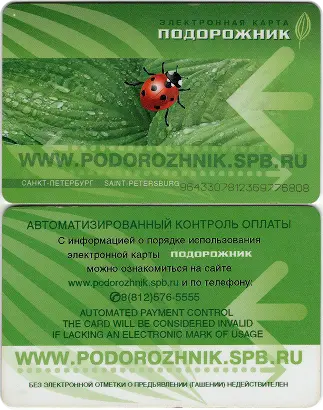
“Podorozhnik” (Подорожник) transport card
Alex “Florstein” Fedorov, Public domain, via Wikimedia Commons
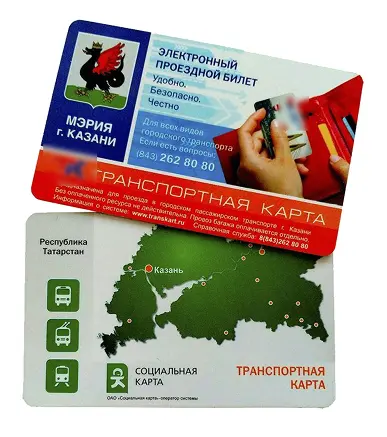
Transport card of Kazan
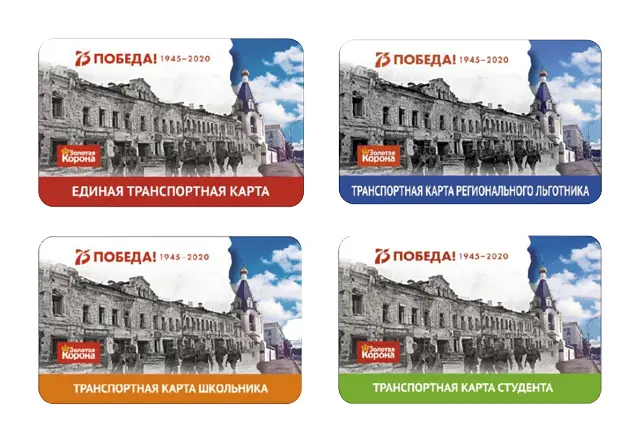
Transport card of Pskov
How do I top up my card?
Below you can see the instructions on how to top up your “Тройка” transport card.
-
1
Select a top-up method.
-
Download the app from App Store or Google Play.
-
Sign in or log in to the app.
-
Choose “Пополнить карту” (Top up the card) section.
-
Tap your “Тройка” card to the back of the phone.
-
Enter the top-up amount.
-
Pay for the top-up by a bank card.
-
Log in to your e-wallet that supports transport cards topping-up (for example, “Sberbank Online” (Сбербанк Онлайн), “Yandex.Dengi” (Яндекс.Деньги), or “QIWI Koshelyok” (QIWI Кошелек)).
-
Choose “Транспорт” (Transportation) section.
-
Select “Тройка” from the list of transport cards.
-
Enter your “Тройка” card number.
-
Enter the top-up amount.
-
Pay for the top-up from your e-wallet account.
-
Contact a subway ticket office.
-
Let the cashier know you want to top up your “Тройка” card.
-
Hand the cashier your “Тройка” card, and specify the top-up amount.
-
Pay for the top-up by cash or a bank card.
-
Find a self-service terminal of subway or ground transportation.
-
Choose “Пополнение транспортных карт” (Transport cards top-up) section.
-
Tap your “Тройка” card to the card reader.
-
Enter the top-up amount.
-
Pay for the top-up by cash or a bank card.
-
2
Wait for the funds to be credited.
-
3
Check the card balance.
When topping-up via mobile application or self-service terminal, funds are credited instantly. When topping-up via cashier or e-wallet, the credit of funds may take up to 30 minutes.
Tap your “Тройка” card to the reader on the turnstile or validator in transportation. The current balance will be displayed on the screen.

Tips:
- Make sure your “Тройка” card has a positive balance before topping it up. Otherwise the card may be blocked.
- Top up the card with an amount sufficient for anticipated rides.
- Keep checks or card top-up receipts for future.
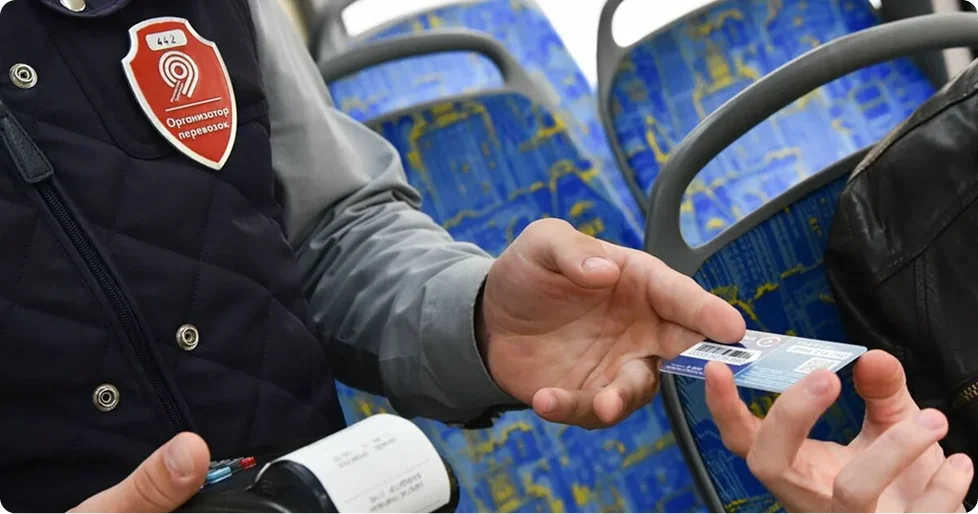
You can buy a transport card at public transport stops or at a subway ticket office. To pay for a ride, you need to tap your card to the electronic reader installed in a vehicle. You can also buy a ticket at the ticket office when you enter the subway. In some cities, you can board the subway if you have paid for entry with a bank card. To do so, just tap your card to the turnstile.
If payment by transport cards is not available at your location, you’ll need to pay a transportation fare to a driver or a conductor when you get on or off the vehicle.
The ticket must be kept until the end of the trip, as controllers may check for it. If your child occupies a separate seat, then you’ll need to pay a fare. A child under 7 years old who does not occupy a separate seat rides free of charge. Aside from paying a standard fare, if you have a luggage (a trunk, a box, or any other large item), you must pay for its transportation too.
What happens if you don’t pay the fare
Have you ever heard the “ездить зайцем” (to steal a ride) expression? In fact, it has nothing to do with the cute animal. The phrase means “to ride without a ticket”. Fare dodging is punishable by a monetary fine and deboarding from transportation. It is considered an administrative offense.
How to behave in transportation
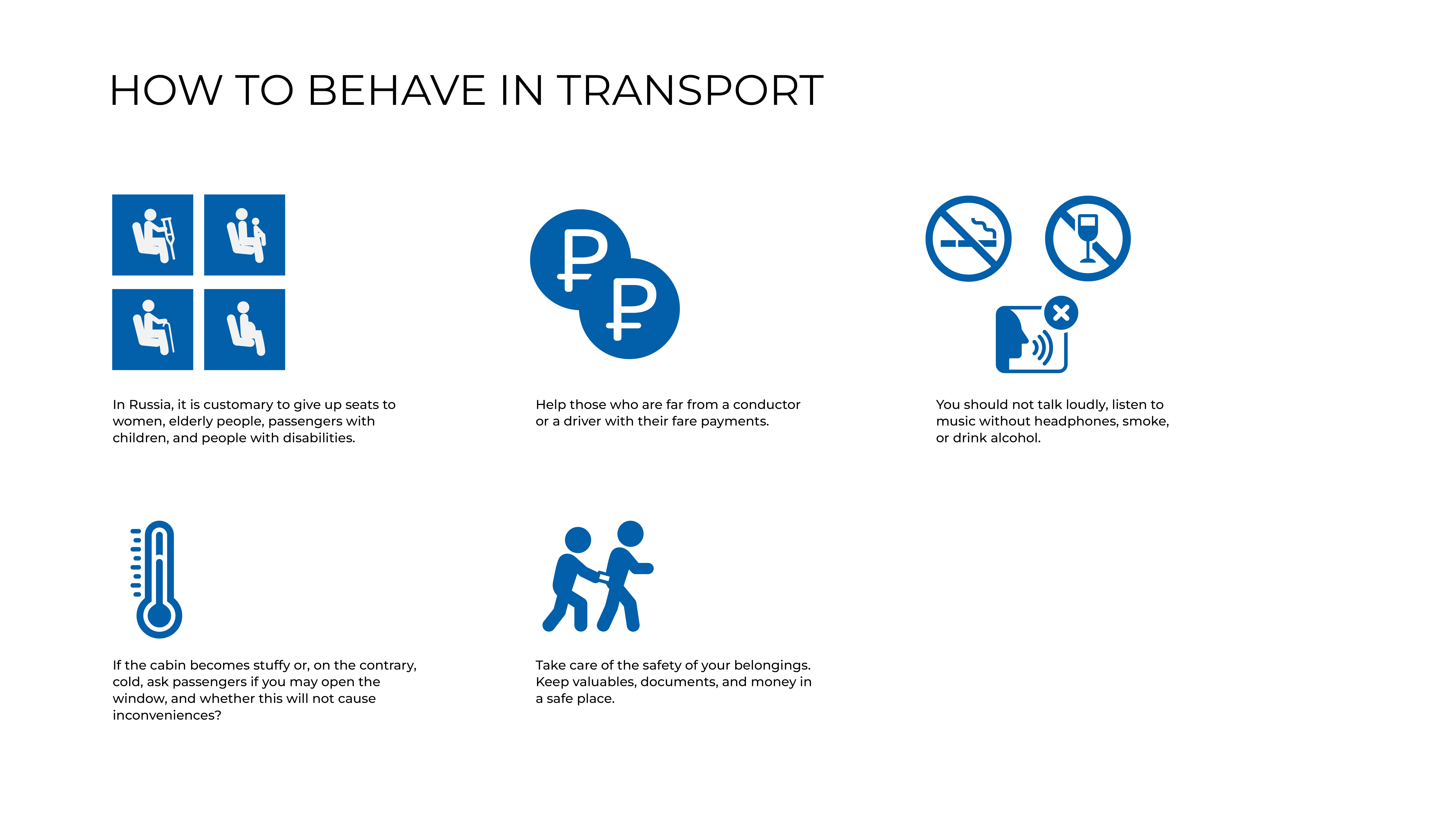
Memo. Behavior in transport
-
1
Boarding and deboarding should be done after the vehicle has come to a complete stop.
-
2
Crossing roads and railroads is only allowed in designated places, at a crosswalk or a bridge.
-
3
If a seat in a vehicle is equipped with seat belts, they must be fastened before riding.
-
4
Do not distract the driver (operator) while riding.
-
5
Do not walk around the passenger compartment while riding. Prepare to exit during stops.
-
6
Hold on to the handrails when riding standing, do not lean against windows or doors, do not stick your hands out, or open doors manually.
-
7
Secure or position your luggage safely.
-
8
Keep an eye on the route. If you don’t know where your stop or station is, ask the driver or conductor for help.
-
9
In the event of an accident, or travel emergency, follow the instructions of the driver, train driver or conductor. Remain calm and do not panic if evacuation is required.
-
10
Do not touch things left unattended in transportation, at a bus stop or train station, report them to the driver, train driver, conductor or police officer.
Taxi
For a quick and comfortable trip, or if you are new to the country or city and have difficulty getting your bearings, a taxi might be the best option. To order a taxi you can call a phone number or use a mobile app, such as “Yandex Go” (Яндекс Go), Maxim, or “Uber”.


Attention! A taxi can be of any color, may have or have no company logo or checkers on the roof.

Ordering a taxi
When ordering a taxi in the app you will see: car’s make and registration number, driver’s name, a route and cost of the trip, which you can pay by cash or a bank card.
You can also specify the number of passengers, whether stops are needed, whether children or animals are going with you (cars are equipped with child seats for safe transportation of children), and whether you have a luggage.
You can book a taxi for a specific date and time, or order it right away. Checking the “locate” box in the app will indicate the address automatically.
Not only using an app is very convenient, but it’s much safer than stopping cars on the road! If you are moving, transporting furniture or other large items, most taxi services offer cargo transportation services.
Carsharing, and how to rent a car
Isn’t it great that most of the traffic rules and signs are international? If you have a Russian permanent residence permit (PRP) or citizenship permit, replace your driver’s license with a Russian one. This will allow you to use short-term car rental services, such as carsharing, or rent a car for a longer period of time. The carsharing is based on a per-minute charge. After the trip, you can leave the rented car at any place of the city.
To find one, use mobile apps (for example, “Delimobil” (Делимобиль), “Yandex Drive” (Яндекс Драйв), “Citydrive” (Ситидрайв). To find an electric scooter you can use “Whoosh” app).

Here’s how you can rent a car using a mobile app.
- Download an app on your smartphone.
- Sign in, provide personal information and driver’s license details.
- Find a vehicle on the app’s map and book it.
- Open the vehicle using the app or a card.
- Upon ending your trip, park the vehicle in an authorized area, and complete the rental in the app.
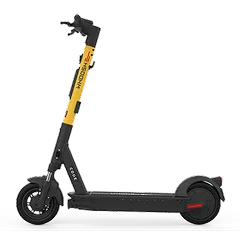
Here’s how you can rent an electric scooter using a mobile app.
- Download an app on your smartphone.
- Sign in, and provide your personal information.
- Find an electric scooter on the app’s map, and scan its QR code.
- Press the “Старт” (Start) button to begin your ride.
- Finish your ride, park the scooter in an authorized area, and complete the rental in the app.
Tips on using vehicle rental apps:
- Read the terms and conditions of use attentively.
- Link your bank card to pay for your rides.
- Make sure you have a valid Russian driver’s license.
- Explore the app’s parking regulations and coverage areas.
- If you have any questions, contact the app’s support team.
Out of town for the weekend
Staying far away from your place of work or study? Want to take a weekend trip to a neighboring city or travel across the country? In this case you will need intercity ground transportation. Buses and commuter trains depart from bus stations, airports, and commuter train stations. High-speed electric trains, suburban trains, long-distance trains with a transfer or direct route will take you to the desired settlement.
Tickets are sold at ticket offices at train and bus stations. You can use the information service at the station to plan your route and choose the most suitable travel conditions.
You can check out schedules online and buy a ticket for a commuter or intercity train on the “RZhD” (РЖД) website, and in apps like “Yandex Raspisaniya” (Яндекс Расписания), “Yandex Puteshestviya” (Яндекс Путешествия), “ZhD Bilety” (ЖД билеты), and “Tutu.ru” (Туту.ру).

How do I buy a ticket online?
-
1
Visit the official website of “РЖД”.
-
2
Choose a route:
- Enter the departure and destination stations.
- Enter the departure date.
- Click “Найти билеты” (Find Tickets).
-
3
Choose a train and a carriage:
- The system will display a list of available trains.
- Choose the train that suits your in terms of departure time, arrival time, and cost.
- Select the type of carriage (compartment, reserved seat, sleeping car).
-
4
Indicate the passengers’ details:
- Enter the last names, first names, and patronymics of the passengers.
- Indicate the type of document that verifies your identity.
- Enter the document number.
-
5
Choose a seating:
- The system will offer vacant seats in the selected carriage.
- Select your seats.
-
6
Pay for the ticket:
- Choose a payment method (bank card, e-wallet).
- Enter your payment information.
- Confirm the payment.
-
7
Get a ticket:
- After successful payment, you will get the e-ticket at the provided email address.
- The ticket can also be saved as a PDF.
Buying a ticket online has many advantages. First of all, it’s time. No need to stand in line at a cashier’s office or contact an agency. You can buy a ticket in minutes anytime, anywhere with Internet access. Secondly, it’s safety. The “РЖД” website uses state-of-the-art data protection methods that keep your personal and payment information secure. Thirdly, convenience. You don’t have to print the ticket to present it when boarding the train. Saving it on your device will do.
Air traveling within Russia is also common and convenient.
Use one of the above mentioned resources to search and purchase tickets online by city across the country. Follow the rules of passenger air transportation. They can be common ones Order of the Ministry of Transport of Russia dated 28.06.2007 N 82 (as amended on 24.11.2016) “On approval of the Federal Aviation Rules “General rules for air transportation of passengers, baggage, cargo and requirements for servicing passengers, consignors, consignees”” / “ConsultantPlus” (КонсультантПлюс) or depend on the selected ticket type: no baggage, open date, non-refundable, priority boarding, etc.

Choosing an accommodation
There are several ways to find lodging: stay in a hotel, rent or buy accommodation. For short-term stays, if you have not yet decided on a place of work or want to choose a more suitable region, you can rent accommodation or stay in a hotel (hostel). One can rent a place in a room or hostel, a room in a dormitory or apartment, or an entire apartment and even a house. In casual speech this accommodation type is called “снять койку” (share a room). The comfort level determines the price.
Hostels
When renting a room, or living in a dormitory (hostel), you will share the restrooms, showers, and kitchen with your neighbors. In the apartment, the kitchen and bathroom will be available to you personally. And that’s not the only difference.
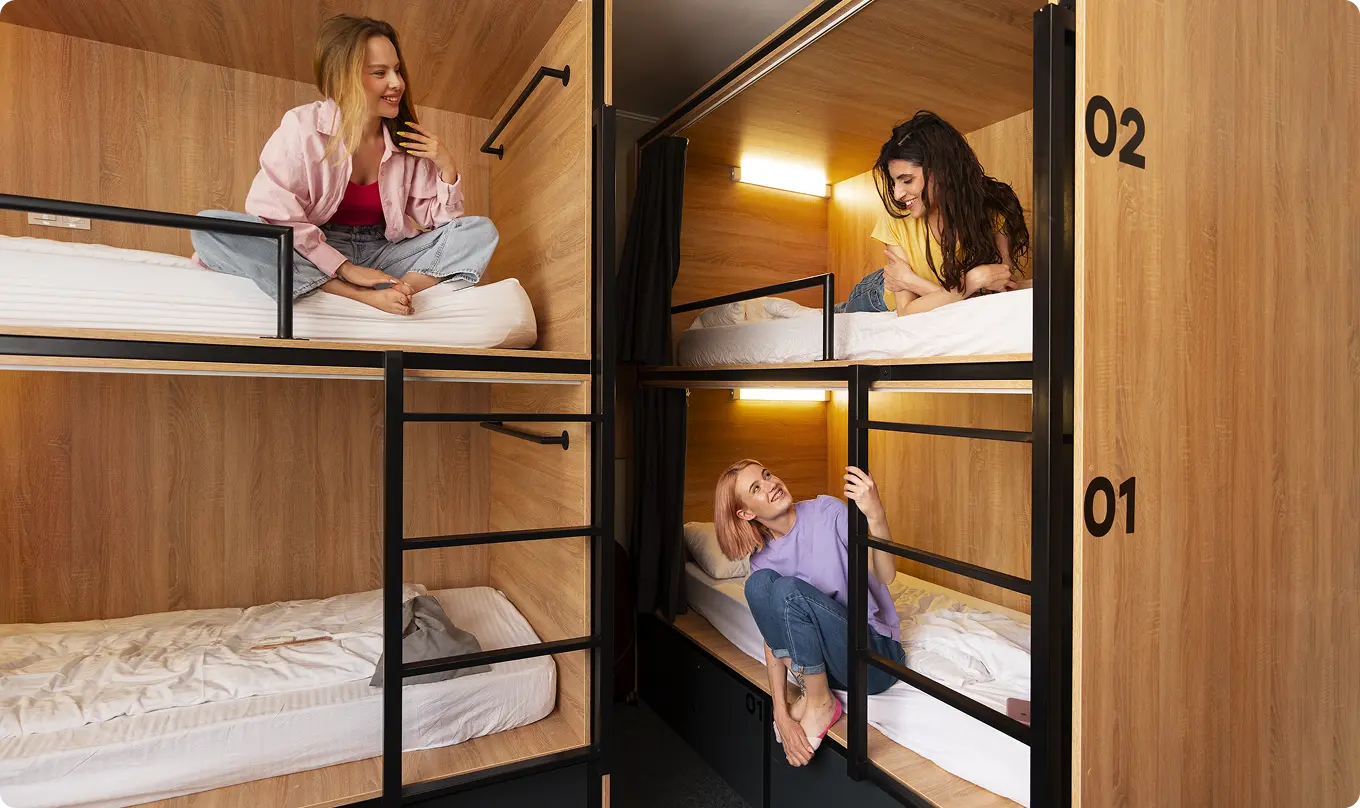
Living in a hostel allows you to save on housing costs, but you need to be prepared for certain inconveniences that come with collective living and limited access to facilities. Some might see the lack of privacy as a disadvantage. Shared rooms and bathrooms mean you have to share space with other guests. The concentration of people in one place can sometimes cause noise and disorder. It makes it difficult to rest. Also, due to the lack of storage space, you might find it hard to fit your bulky luggage and clothing.
The pros of living in a hostel for foreigners include a social environment that makes it easy to make new acquaintances. Communicating with people from different parts of the world will make your everyday life interesting and rich. In addition, hostels usually offer flexible accommodations such as short rental periods and the option to extend stays. What’s more, hostels are often conveniently located. This is very attractive to out-of-town visitors.
Renting an apartment or a room
To sign a rental agreement (as a tenant) or when moving into a hostel or hotel, you will need your passport and the documents of everyone who will be staying with you. The cost depends on the number of tenants and the size of the dwelling. The term and conditions of the tenancy must be agreed with a landlord or landlady (owner of the apartment). When entering into an agreement, check the documents that confirm the landlord’s ownership of the premises.
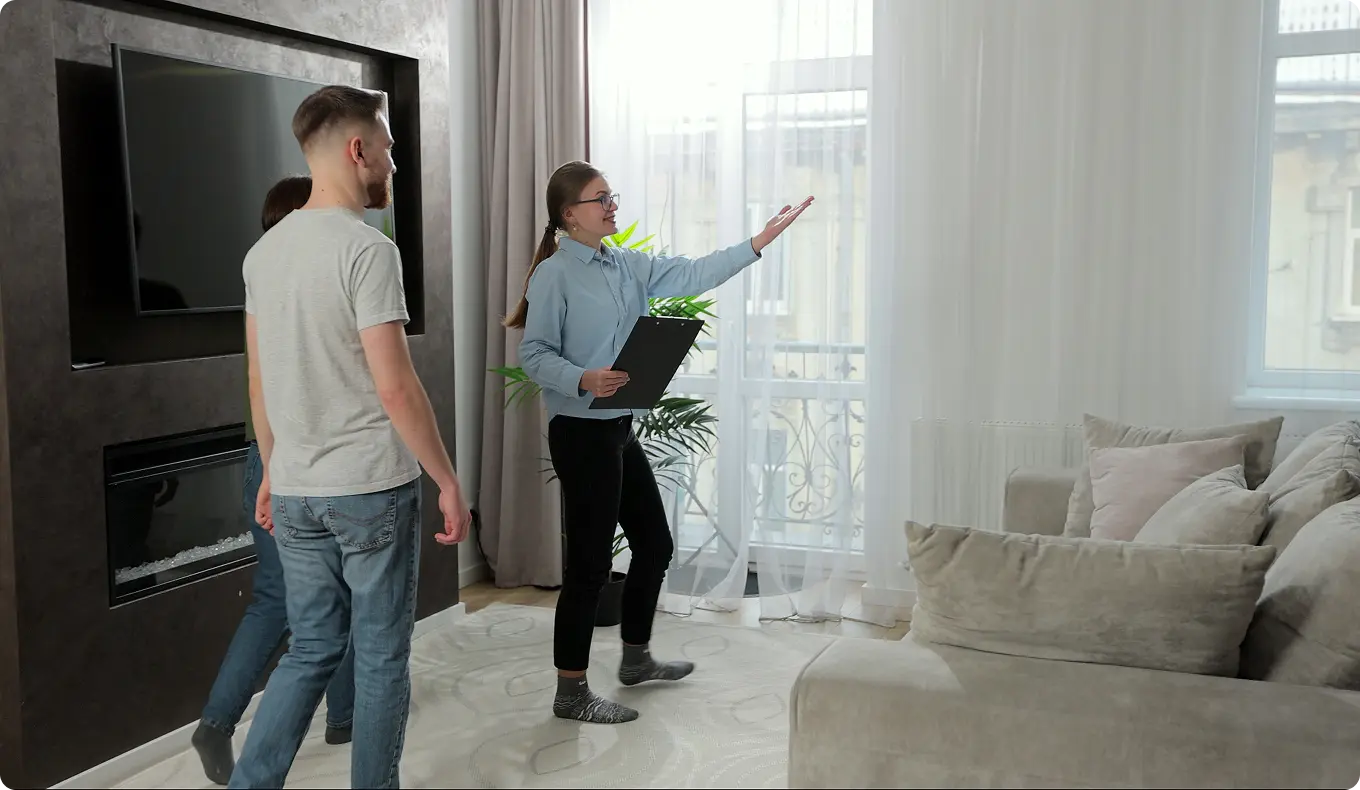
You have the right to ask your landlord for temporary registration at the address of rented accommodation. Such registration will be unconditionally accepted by any employer, unlike registration in the so-called “rubber apartments”, the addresses of which may often come to the employer’s attention when employing foreigners. There may be several dozen people registered with none of them actually living there. Please remember, that in addition to the rent’s cost you will need to pay a deposit of up to 100% of the rent for one month, which will be returned at the end of the contract term, and pay for the services of your estate agent (realtor) if applicable.
Remember to contact only agencies and realtors who are licensed to conduct real estate business. You can check the licenses on Unified register of certified companies and certified specialists of the real estate market website. Otherwise, you put your money and housing at risk. The agency should have a website and an office where you will be invited to sign a contract.
Rent is payable in regular installments (on a certain day of a month) or for the entire period of stay. In rented housing, you must pay monthly utility bills (utilities): electricity, water, heating, garbage disposal, and Internet access. As a rule, paper receipts may be found in the mailbox of the apartment. They can also be electronic, in which case the landlord shows them to you. The range of purchased utilities may vary on a case-by-case basis. If you prefer to search for accommodation on your own, try one of these websites: “Cian” (Циан), “Avito” (Авито), “Ostrovok.ru”, “Kvartirka” (Квартирка), “Sutochno.ru” (Суточно.ру), 101HOTELS.com, or use “Yandex Puteshestviya” (Яндекс Путешествия) service.
Rules for living in rented accommodation
Even a temporary housing will become your home. It is a good practice, therefore, to observe certain rules (cleanliness, silence, no smoking, etc.) in any accommodation you rent. Please be mindful of the furniture, appliances, and communication lines like a true landlord. Follow safety rules, and in case of household problems contact the hotel receptionist, your landlord or emergency services at these numbers: 101 – fire service, 102 – police, 103 – ambulance, 104 – gas service, and 112 for any emergency.
Communication with neighbors takes place in messenger chats, by means of announcements or at meetings of residents. A leaflet on hotel rules is given upon check-in. When renting a room or apartment, such rules may be mentioned in the contract as your responsibilities. Discuss them with your landlord.
Buying an apartment in Russia
If you have decided to buy housing in Russia, please note that buying an apartment or house in Russia does not give a foreigner any privileges or benefits, nor does it reduce taxes. Foreigners are required to pay real estate tax of between 0.3% and 2% of the full price of the purchased housing. If an owner decides to sell the apartment in the future, they will have to pay the RF state a tax of 30% of the profit.
To purchase housing, foreign citizens over the age of 21 from most of the countries can apply for a mortgage in a Russian bank secured by the purchased property. To do so you have to present personal documents: a passport of a foreign citizen, its certified translation into Russian, a migration card with valid period of stay in the Russian Federation (not required for citizens of the Republic of Belarus), a document of permanent or temporary residence permit in the territory of the Russian Federation, a document that confirms the right to stay (reside) in the Russian Federation, as well as a certificate, confirming the length of service at the current place of work for more than 3 months, other information and documents required by your bank.

The purchase of housing does not simplify obtaining a PRP or citizenship permit. A foreigner cannot obtain a permanent residence permit in a purchased apartment, but a temporary one. It is also required to follow the “90/180 rule”.
Please note. The “90/180” or “90 of 180” rule limits the time you can stay in Russia. After the first day of entry into the Russian Federation at the border checkpoint, the countdown of 180 days begins, of which a foreign citizen can spend a total of only 90 days in Russia. The period of stay can be interrupted as many times as you like. This limit is in effect for one 6-month period.
Exceptions to the “90 of 180” rule exist for foreigners who stay in Russia during the validity period of a visa or without a visa. For example, for citizens who entered Russia without a visa, the exceptions are related to the registration of a patent for the right to work on the territory of the Russian Federation, temporary or permanent residence permit, full-time education, conclusion of an employment contract with an organization (for citizens of Armenia, Kyrgyzstan, Belarus, Kazakhstan). Citizens with a multiple-entry business or humanitarian annual visa may stay in the Russian Federation for a total of no more than 90 days during each period of 180 days.
Now you know the basics about:
- modes of public transportation in Russia;
- buying transportation tickets;
- a car and electric scooter rental;
- mobile apps and services for transport card payment, ticketing and urban navigation;
- rented accommodation options in Russia;
- the rules for tenancy agreement conclusion;
- buying housing in Russia;
- rental websites and services.