
How does a family live in Russia?
What could be more important in our lives than a family? It is our support and a safe harbor. This article will tell you how families live in Russia, and what documents are required to solve family tasks, such as education, children raising, and health maintenance.

Page navigation:
Mom, dad and I – are a close-knit family
A family in Russia is more than just parents and children. Overall, a family is a clan (several generations) of relatives that includes blood relatives (grandparents and their siblings, aunts, uncles, cousins, nephews and nieces, grandchildren), as well as non-blood relatives but close people (e.g. godparents and godchildren).
A modern young family is a couple that is a separate household with its own traditions and rules, similar or different from those of the parents’ families. To understand how big a Russian’s family is, it is enough to attend their family event or celebration (an anniversary, or a wedding). They are usually pretty crowded.

How does a family live in Russia?


International Family Day is celebrated on May 15. In modern Russia, July 8 is the Day of Family, Love and Fidelity, established by the presidential decree. The symbol of this holiday is a daisy.

Who does a family communicate with?
A family’s social circle includes friends, their families, and neighbors. In apartment buildings of megacities, good neighborliness (attentive attitude of neighbors, mutual assistance) is a little less common than in villages and small towns. People who live next to each other for a long time have each other’s lives in front of their eyes. So a greeting, a short conversation, a small request (especially for help for lonely or elderly people) are very common.

Don’t forget to say hello to your neighbors
Getting to know your neighbors will help resolve common issues. However, don’t be intrusive and avoid violating personal boundaries. Giving your neighbors the keys to your house, or asking them to look after your pets is not a good idea. Just try to be reasonably cautious.

Family rules
Family members have their own rights and responsibilities. As children grow up, they take part in cleaning the house, take care of the animals, and help their parents. In turn, parents must (by law) support, raise and educate their children, as well as protect their rights and interests. A parent’s failure to fulfill his or her responsibilities is punishable by law. The state body that monitors the welfare of children in Russia is the Juvenile Affairs Unit (Подразделение по делам несовершеннолетних, ПДН).

Children under the age of 14 should not be left unsupervised at home or outdoors. A failure to comply with this principle is not punishable by law, but if a child gets hurt, makes an offense, or harms others, the parents will be held responsible.
Family documents
Personal documents
Some events and stages of a person’s life in Russia are documented. If you have already received the below documents in your country, it is better to have them translated into Russian and notarized in advance.

|
Document title
|
Recipient
|
Place of issue
|
Event or entitlement confirmed
|
Additional requirements
|
|---|---|---|---|---|
|
Marriage certificate
|
Husband and wife upon the marriage conclusion
|
Civil Registry Office (other equivalent agencies / bodies)
|
Conclusion of marriage
|
State duty must be paid
|
|
Certificate of divorce
|
Husband and wife upon the marriage dissolution (divorce)
|
Civil Registry Office (other equivalent agencies / bodies)
|
Dissolution of marriage
|
State duty must be paid
|
|
Birth certificate
|
Child’s mother or father
|
Civil Registry Office (other equivalent agencies / bodies)
|
Birth of a child
|
|
|
Certificate of first name / last name change
|
A person who changes their first or last name
|
Civil Registry Office (other equivalent agencies / bodies)
|
First name / last name change
|
State duty must be paid
|
|
SNILS (СНИЛС)
|
Adults, parents on behalf of their children
|
Pension Fund Office, MFC
|
Registration in the Compulsory Pension Insurance System
|
|
|
Medical policy (voluntary health insurance policy)
|
Adults, parents on behalf of their children
|
“Gosuslugi” (Госуслуги) website
|
Medical care
|
It is necessary to choose and pay for a medical services package (500–12,000 rubles)
|
|
Pension certificate
|
Adults who have reached retirement age
|
Pension Fund Office
|
Pension and benefits
|
Permanent residence on the territory of the Russian Federation for at least 15 years
|
Education in Russia: from nursery schools to higher education institutions
Russian education is famous all over the world. General education is divided by age and objectives into the following levels. The first children’s group is a nursery or a kindergarten group (aged 2 to 7 years). The child then enters a school, lyceum or gymnasium (aged 7 to 17 years) and receives:
elementary education (grades 1–4);
basic general education (grades 5–9);
secondary general education (grades 10–11).
After graduating from grades 9 or 11, a child may receive secondary vocational education at a college, vocational school or college, or higher education at an institute, academy or university.

Basic general education is compulsory in Russia. Everyone needs to graduate from 9th grade.
Kindergarten
The main objective of the kindergarten is to organize the leisure and development of young children. Education is also part of the kindergarten’s tasks, but parents are primarily responsible for the upbringing of children. There are 20 to 25 children in the kindergarten groups. During the day, they walk on the garden grounds, sleep, study, and play under the supervision of the caregivers. Kindergartens provide complex meals (they are inexpensive and paid separately).
In addition to the general development program, most kindergartens offer optional paid educational services, such sports sections, creative classes. Children may only be taken out from kindergartens by their parents or close relatives, provided that their names are specified in the contract.

You are entitled to send your children to kindergarten and school in Russia, even if you are a foreigner. The only reason why your child may not be accepted to kindergarten in Russia is the lack of vacant places.
You can find more details of the corresponding law at this link: Статья 78. Организация получения образования иностранными гражданами и лицами без гражданства в российских образовательных организациях КонсультантПлюс..
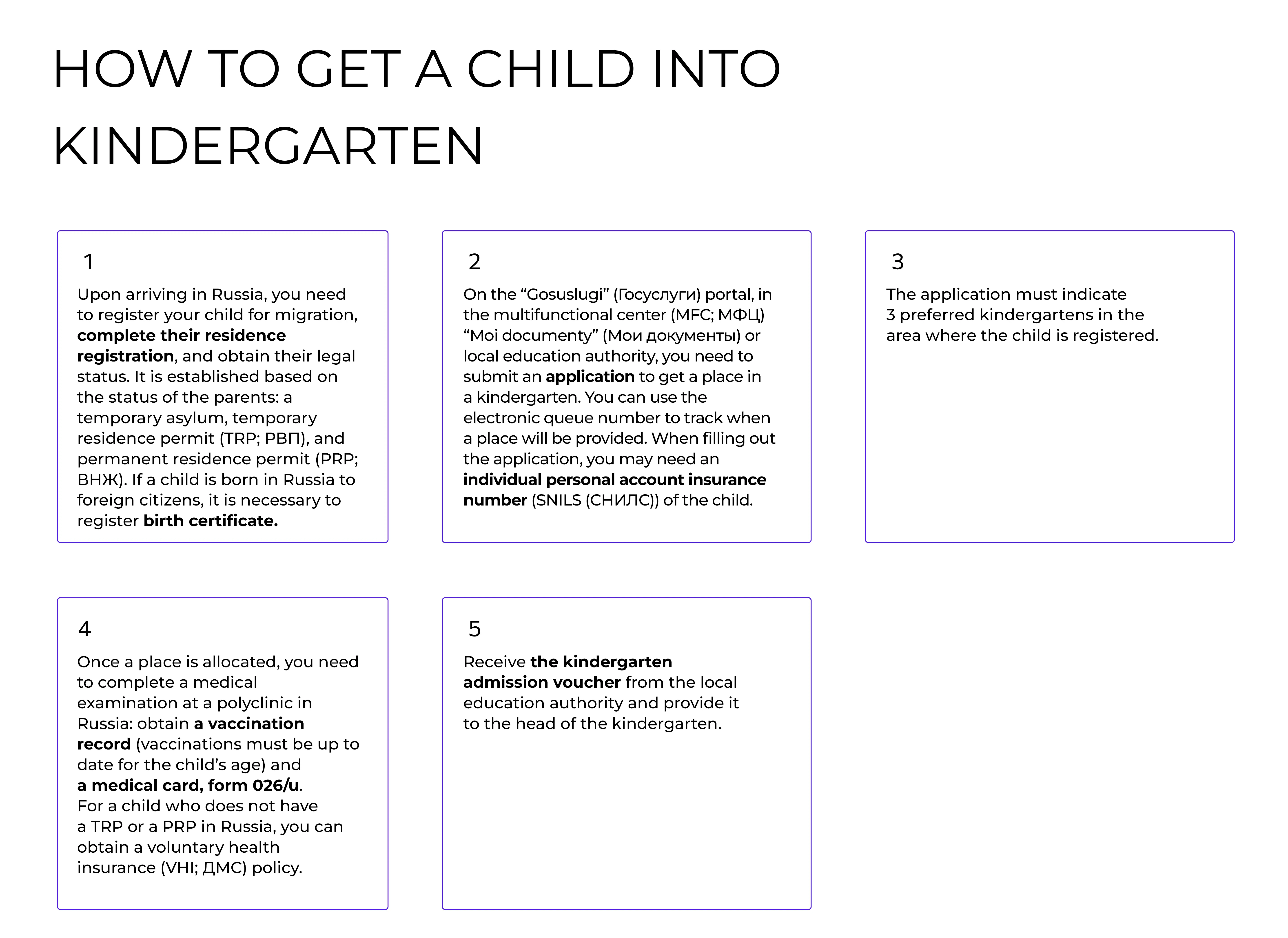
Does this seem complicated? Nonetheless, completing these steps is worth the smile your child will reward you with when he or she adapts to the peer group. Their leisure time will be harmoniously organized, and their everyday life will be filled with bright emotions and new experiences. You, in turn, will find more time for work and self-realization.
Private kindergartens, temporary stay groups, and development centers accept children from the age of one and a half years. They also require less documents: identity documents of a parent and a child, an application, a contract, and a medical certificate.
The wonderful school years
The school’s primary objective is to provide knowledge, and build skills and abilities. The school building accommodates students of all grades of the respective education levels: primary, general, and secondary. The school year begins on September 1 and lasts till the end of May.
Study schedule
The school year is divided into 4 quarters. Students have 30 days of vacation during the school year (first graders have 35 days), and 3 months in the summer for recreation purposes. In June, summer sites (day camps) are organized at schools for younger pupils. Their goal is to strengthen family and school ties by leisure and socially significant activities for schoolchildren during the vacations. Middle and high school students take exams in June.

How are classrooms arranged?
As a rule, there are 20 to 25 people in a class. Everyone in the classroom has their own seat, with desks for one or two person in rows. All classes, except for physical education, are taught by one teacher, the class teacher, and lessons are conducted in one room.

How is knowledge assessed?
There is a 5-point grading system (5-4-3-2-1), where 5 is the highest grade. Subject grades are posted daily in an electronic gradebook, where parents can instantly review their children’s daily results, and/or paper gradebook (also known as homework diaries). Teachers keep a class journal where they note attendance, grades, lesson topics and assignments. The final grades that are posted at the end of each quarter and school year reflect a student’s overall progress.
Exams
Enrollment in grades 10 and 11 or admission to a secondary vocational education institution is based on the competition of certificates (the average score in all subjects is taken into account) and exam results.
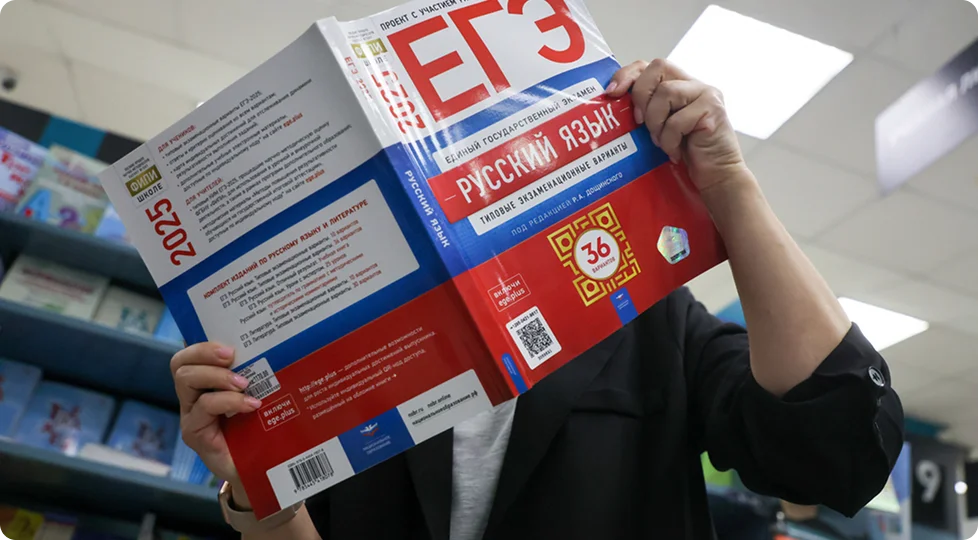
After 9th grade (the level of basic general education) they take a Basic State Exam (BSE; ОГЭ) in 4 subjects: Russian language, mathematics and 2 subjects of their choice. At the end of the 11th grade (the level of secondary general education) they take a Unified State Exam (USE; ЕГЭ) in 4 subjects: Russian language, mathematics and 2 subjects of their choice. The results of the latter are to be provided upon admission to a higher educational institution.
School grounds
The school territory is fenced, and the checkroom for students is located in the entrance hall. Students have to leave their outerwear and street shoes there before proceeding to the classrooms. Preschools and schools in Russia have security and badge entry systems. A security guard at the entrance may ask anyone to open their bag or purse to check for prohibited items.

School uniform
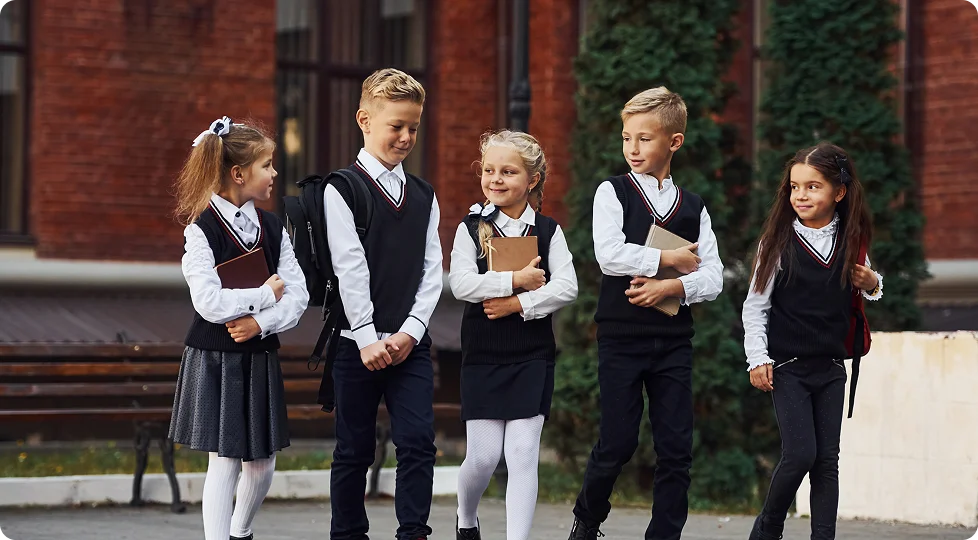
In addition to school clothes or uniforms (some schools have standardized ones), your child will need a change of shoes, clothes and shoes for physical education classes. Wearing street shoes in a school is not allowed.
Before the start of the school year, class teachers inform parents about what uniform and school supplies are necessary for the school year depending on the subjects.
Parent chats
During the school year parents can communicate with other parents and the class teachers in dedicated messenger chats. It is also recommended to subscribe to the official school or kindergarten groups in social media to stay updated. There are parent-teacher meetings, that occur at least once a quarter. The class teacher and teachers use them to report on the results of studying and the behavior of pupils, and to discuss other vital topics on the class life.

Health care at schools
Kindergartens and schools have medical rooms where your children can receive first aid or medical advice.
Schools employ a psychologist who helps children with adaptation issues, interaction with peers and teachers, and child-parent relations.
School meals
Children eat at the school canteen. Starting from the 5th grade meals become paid.
Pupils are free to decide on their menu, and the average cost of a lunch is 100 to 300 rubles.

The way to school
Only parents and close relatives are allowed to take elementary school pupils to and from school.
If your child knows the way home, the road regulations, and knows how to behave on the street, you should write a statement to the principal that establishes your responsibility for your child’s health and safety on the way home from school. In this case, a child is allowed to return home independently.

Extracurricular activities
Aside from school classes, there are also extracurricular activities.They may include a variety of study groups, workshops, classes and clubs to make your children’s life, development and leisure complete. These activities take place at school.
After regular classes, children can attend choreographic studios, sports, art and music classes, as well as supplementary education centers. This way children can fulfill themselves in different fields, and try everything that interests them: learn to knit, play chess, build robots, and so on.

Health care in Russia
Health is essential to any family’s happiness and success. It’s not for nothing that they say: “В здоровом теле – здоровый дух” (A healthy mind in a healthy body). Any family faces issues of restoring or maintaining health once in a while. Russia boasts high-quality and affordable medical care, which may generally be divided into emergency (urgent) and elective. In cases of life-threatening conditions, acute pain or the onset of labor, you should call an ambulance. The numbers are “112” or “103”. With non-urgent issues, it is customary to go to a state or private (medical center) polyclinic in Russia.
How to treat children
In Russia, children are treated in children’s polyclinics. The primary doctor is a pediatrician. They conduct examinations, give recommendations on treatment and prevention of diseases, prescribe necessary examinations, control the terms of immunization, issue certificates for attending children’s educational institutions and swimming pools.

Where can adults get treatment?
The medical personnel of polyclinics for adults includes: therapists, surgeons, ophthalmologists, urologists, otolaryngologists, endocrinologist, cardiologists, and allergists. Examinations, electrocardiograms, X-ray scanning, and other types of analysis are carried out in laboratories, using ultrasound machines and other equipment. There is also a treatment room, of course. In rural areas, medical care is provided by a feldsher (and other specialists) at a feldsher and midwife station.
With a voluntary health insurance (VHI) policy, the service is free of charge. You can arrange a visit to a doctor by calling the polyclinic reception desk, on the “Госуслуги” portal, or directly at the polyclinic reception desk.
You must be registered at a polyclinic before you can receive care. What does that mean? First, you should apply to a medical facility of your choice. Selection is based on the area of residence (registration at the place of residence or rental). After a note of registration is made in the database, you will be offered to enroll in those polyclinics at which you were registered, on the “Госуслуги” website. It’s very convenient. The polyclinic will be located close to where you live, and the doctor will be able to visit you at home in case of fever, or inability to move around.
If the appointment time at the polyclinic does not suit you, the specialist you need is not available, or you do not have a VНI policy, you can go to a private clinic. The conditions of care are the same as in the public one, so the only difference is the need to pay for treatment and examinations.

It is better to visit the same polyclinic, as a medical card will be kept there. This way, a full history of referrals will be retained over the years of service.
How does a doctor’s appointment take place?
When you enter the polyclinic, you may have your temperature taken, be asked to wear a protective mask (during an epidemic), and shoe covers to keep clean. Then you need to take the necessary documents (medical card, examination results) at the registrar’s office and find your doctor’s medical office. Check with other patients to see who is ahead of you. This is how a queue works. Your appointment will take place at the designated time. You may need to wait, though, if the doctor sees repeat patients, who are served on a “first come first served” basis.

The doctor will study your complaints and symptoms, perform an examination, measure your temperature and blood pressure. They may prescribe medications or vitamins you can purchase at the pharmacy, assign other treatments, or order additional examinations. Medications are divided into prescription drugs (your doctor gives you a prescription to buy them), and over-the-counter drugs (they are available over-the-counter, and you do not need a prescription to buy them).
Where to buy medications?
You can purchase medications that you take on a regular basis or that you have no doubts about directly from the pharmacy. To do this, name the medication, its active ingredient, or indication for use. You can buy medical instruments, devices, and care products at the pharmacy too. In cities, there are 24-hour pharmacies, which are called “all-night pharmacies”.

Specialty polyclinics and hospitals in Russia
Specialty polyclinics and hospitals play an important role in maintaining our health. They provide specialist services. A dental polyclinic (adult or children’s) is where you receive qualified assistance in case of a toothache, or if you need to correct your bite, replace missing teeth, and undergo apparatus hygienic cleaning. Ophthalmology clinics help restore vision.
Women’s consultation clinics provide advice and treatment in the field of gynecology, and on pregnancy issues. Pediatric gynecologists provide preventive medical examinations for girls. Maternity hospitals and perinatal centers provide assistance to women during pregnancy, and during pre- and postpartum periods. The staff provides observation and care of newborns.

Hospital treatment
A hospital is a place where surgeries are performed and hospitalization is provided. There are several ways to get to the hospital:
By referral from the doctor of your polyclinic. If the doctor at your polyclinic believes that your condition requires hospitalization, they will write you a corresponding referral.
At the discretion of the emergency physician. If your condition requires emergency medical attention, you can call an ambulance to take you to the hospital.
On your own. You can go to the hospital yourself if you think your condition requires hospitalization. However, in this case, you may be denied hospitalization if there is no medical evidence to do so.

The following documents are required upon admission to the hospital:
- Passport or other identity document.
- Compulsory health insurance (CHI) policy.
- Doctor’s referral (if available).
- Medical card (if available).
- Results of tests and other medical examinations (if available).
If you are not registered in the CHI system, then medical care at a hospital is provided at the expense of the budget of the respective region. In such cases citizens are guaranteed to receive medical care and hospitalization.
During hospital treatment, you should consider taking with you:
- Comfortable clothing and shoes.
- Personal hygiene items (toothbrush, toothpaste, soap, shampoo, comb).
- Bed linens, towel, sleepwear (if allowed in the hospital).
- Books, magazines, gadgets and their chargers.
- Money (for personal expenses, if necessary).
Important! Before bringing any items with you, check the list of allowed items with the hospital.
You will be able to visit your loved ones at the hospital on a scheduled basis, and bring necessary items and allowed food, if the hospital is not quarantined.
When you go to the hospital, the doctor will examine you in the emergency room, assign you to a room, and tell you about the rules and routine. They will prescribe tests and examinations, as well as medication or surgery.
Please remember, your health is in your hands. A timely medical treatment will make your life comfortable and fulfilling.
