
Higher education in Russia

Page navigation:
Why Russia?
One of the promising areas of Russia’s foreign economic activity is the export of education. In response to the growing global demand for higher education, Russian universities have developed effective academic programs that offer high quality at an attractive cost. “Вуз” (university) is an abbreviation in Russian that refers to any institution of higher education, including universities, academies, and institutes.

Every 10th student in Russia is from abroad. In 2023/2024 academic year, over 355,000 international students were enrolled in higher education institutions across the country.
Currently, there are 1056 universities in Russia offering full-time programs in a wide range of fields that serve all sectors of the economy. Three Russian universities rank among the top 100 globally for teaching quality, while eight more are in the top 200, according to the 2024 Round University Ranking (RUR).

Applicants are particularly interested in the most modern and breakthrough fields in which Russia is traditionally strong, such as engineering, medicine, physics, mathematics, chemistry, and computer science. Many of the country’s scientific schools, known since Soviet times, continue to advance research and shape the global scientific agenda.
The list of fields is outlined in the Ministry of Science and Higher Education of the Russian Federation Order No. 89, dated February 1, 2022 / Official publication of legal acts (Приказ Министерства науки и высшего образования Российской Федерации от 01.02.2022 № 89. Официальное опубликование правовых актов).

Why, in addition to the high academic standards and achievements in science and technology, do people from around the world choose to study in Russia?

Some are guided by parents who have graduated from one of the Russian universities. Others are attracted by government support and scholarship opportunities. The Russian government actively supports international students, offering a range of scholarships and grants,
fostering strong educational partnerships and traditions. For example, Russian universities provide international academic exchange programs and dual-degree programs.
Additionally, the comfortable living conditions in the country are a notable advantage. Years of experience welcoming international students have helped create a multilingual and safe environment in cities and on university campuses. If the Russian language is a pull factor for you, you’ll have a unique opportunity to immerse yourself in the culture and language, which reflect one another. This experience will not only help you become an expert on the country but also give you valuable insights into global processes.
While the cost of education varies between regions and cities, it remains more affordable compared to many other countries worldwide. You can view current tuition fees for the program you are interested in on the university website or on an aggregator website. The most budget-friendly programs cost $900 per year, while the most expensive ones are at universities in world rankings – over $8000 per year. On average, in 2024 tuition fees were about $2000 per year.
Admission requirements for international students
Where to start from?
Foreign citizens have the same access to admission to Russian universities as Russian applicants. The main challenge for international students is typically a limited proficiency in the Russian language. However, there are several ways to address this issue: special language programs at university preparatory departments, Russian language courses for foreign students, often conducted in English, and tutoring services.

Generally, Russian language training at preparatory faculties lasts one academic year. During this time, students not only adapt to life in Russia but also reach the language proficiency level necessary for successful university studies.
While tuition for these courses is usually paid, there are exceptions for students who have received a quota from the Russian Federation. This quota covers tuition, a scholarship, and a place in student housing. Each year, the number of quotas for foreign applicants increases, and it is currently set at 15,000 quotas annually.
Useful links:
To learn more about the availability of these government-sponsored quotas and to apply for the free education program, simply follow 4 simple steps.
Winners and runners-up of All-Russian and specialized Olympiads are also eligible to enter Russian universities on preferential terms. A list of international Olympiads approved by the Ministry of Science and Higher Education of the Russian Federation is available here.
Selection is conducted in your home country at the Rossotrudnichestvo (Россотрудничество) representative office or the Russian Embassy. See the list of addresses and contact details here.
Top universities also offer demo versions of entrance tests online on their websites, where you can prepare for interviews and take mock exams, for example, MGIMO.
You can find the full process for admission to a Russian university under the quota system here.
Video course on admission: How to enroll in a Russian university.
University admission
The university admission process should begin with choosing a field of study, specialty, and the appropriate institution. In Russia, you can select from basic or specialized higher education programs, as well as pursue postgraduate studies at over 700 universities. The education format in Russia can be in-person, in-person and remote, or correspondence, with options for electronic learning (EL) and distance education technologies (DET).
Once you’ve made your decisions, choose at least 5 universities where you’d like to study and submit your applications through your personal account on the official university website.
There is a proverb in Russian: Ученье – свет, а неученье – тьма (Knowledge is light, ignorance is darkness). It highlights the importance of education for personal development and its impact on future career opportunities.
Submission of documents
To apply, you will need to prepare an application packet, which may vary slightly depending on the specific university and program requirements. The main documents include:
- application for admission (in Russian);
- identity document;
- education certificate (Russian or foreign);
- the applicant’s birth certificate and copies of the parents’ passports (if born in the USSR or Russian Federation);
- documents confirming the permanent residence of the applicant and their parents abroad;
- completed application form;
- medical certificate confirming the absence of HIV.

Quota applicants must also provide a referral from the Ministry of Science and Higher Education.

For those applying for specialized higher education programs, a motivation letter should be included along with the documents listed above. Those applying for postgraduate programs must submit abstracts of scientific paper and a list of publications.
All documents in a foreign language must be translated into Russian and certified by a notary or the consular department of the embassy.
You can submit your documents through your personal account on the official university website or via the “Gosuslugi” (Госуслуги) portal.
Entrance tests
Entrance tests (exams) may be taken in traditional written form or remotely (online). Additionally, the results of the unified state exam (USE; “единый государственный экзамен” (ЕГЭ)), or other tests alongside the USE results, may be accepted in place of exams.

It is important to note that each university has its own specific rules, so be sure to review them carefully and follow the instructions when taking the tests.
If you need to take in-person exams, you should apply for a visa in advance and travel to Russia on the dates set by your university. For more details, please consult the international office at your chosen university or the consular department of the Russian Embassy in your country.
Visa processing
If your country has a visa-free agreement with the Russian Federation, you do not need a visa. Applicants from Belarus, Kazakhstan, Armenia, Kyrgyzstan, and Ukraine can enter without a foreign passport. However, applicants from other countries will need to apply for a study visa. To do so, you must gather the necessary documents as instructed by the consular department, including the original invitation from the university or the Ministry of Foreign Affairs of the Russian Federation.
Fee-paying applicants should be aware that no invitation to study will be issued without prior payment.
It’s important that your full name (including patronymic, if applicable) in the document translations matches exactly with the name on your entry visa.
Applicants from Belarus, Kazakhstan, Armenia, Kyrgyzstan, and Ukraine can enter without a foreign passport.
To obtain a temporary residence permit for the period of study, you must submit to the migration specialist: an application, a certificate of enrollment in an educational institution, and a medical certificate.
See more detailed information here.

Diplomas and degrees
In Russia, you can earn a bachelor’s degree through basic higher education, which typically takes 4 years.
For some specialties, the duration is extended to 5 years, and you’ll receive a specialist diploma instead.

The second stage of higher education in Russia, as well as worldwide, is the Master’s degree, which in medicine is referred to as a residency. This stage involves in-depth study in a specific field and typically lasts 2 years (though it can be 3 to 5 years for some medical fields).
The degree system is subject to reorganization from 2025. Bachelor’s and specialist degrees will be combined into a single basic higher education program lasting between 4 and 6 years. Master’s and residency programs will be categorized as specialized higher education, lasting 1 to 3 years.
Those interested in academic or research careers can pursue graduate studies. This typically takes 3 to 4 years. Several universities in Russia offer postgraduate programs in English, including: Moscow State Institute of International Relations (MGIMO), Moscow Institute of Physics and Technology, Peoples’ Friendship University of Russia (PFUR), Siberian Federal University, Tomsk State University, ITMO University, Ural Federal University named after the first President of Russia B. N. Yeltsin.
After successfully defending your dissertation, you will be awarded a PhD. The Russian PhD is equivalent to the international PhD, but unlike in other countries, it is not the only academic degree. In Russia, it is followed by the degree of Doctor of Science. A professor in Russia is not a degree, but a title or position. To become a professor at a Russian university, you must publish over 50 scientific papers, deliver a course of lectures at a high professional level, earn a doctoral degree, have a total length of scientific or pedagogical work experience of at least 10 years, serve at least 2 years as head of a department, dean, head of research, or rector, and hold the academic rank of assistant professor.
In Russia, it is customary to address university professors by their first name and patronymic, and their academic title must be included in official documents. For example, “Здравствуйте, Александр Петрович! Я к Вам на консультацию” (Hello, Alexander Petrovich! I would like to consult with you.) or “Научный руководитель, проф. А. П. Яблоков” (Scientific supervisor, Prof. A. P. Yablokov).
What does an academic year look like?
The academic year in Russian universities follows a standard schedule. It begins on September 1 and ends in late June.
The year is divided into 2 semesters:
1st semester::
September 1 – January 25
2nd semester::
February 9 – June 30
Winter vacation lasts 2 weeks, from January 25 to February 9, while summer vacation lasts 2 months, from July 1 to August 30 (excluding internship periods, if required by the program).
Many international students return to their home countries during these breaks, but it is also possible to stay in Russia.
Sessions
Twice a year, students take their sessions, which consist of exams (graded on a 5-point scale) and credits (if you successfully complete the course, you receive a credit; if not, no credit is given) for the courses taken during the semester.
Differentiated credit is a special certification system. This is the test by which a grade is given.


There is also a special reward for active participation and regular class attendance called “automatic credit” or “automatic exam”. The instructor will explain the criteria for the final evaluation at the first session.
Typically, the winter session takes place after the New Year holidays, while the summer session starts at the end of May and lasts until the end of June.
Successfully completing the session guarantees transfer to the next year, and may also result in a tuition discount, an increase in scholarship, or even a transfer to a state-funded program. However, failing to pass the session on time and successfully could lead to the loss of scholarship or require a student to retake exams.
In Russia, there’s a saying, “От сессии до сессии живут студенты весело” (From session to session, students live merrily), referring to the carefree period between exams. However, don’t forget the potential consequences of neglecting the studies.
If you fail an exam, you have the right to retake it twice. For instance, retakes for the summer session are usually scheduled for the beginning of the next academic year. If both attempts fail, the university may expel the student.
At the end of their studies, students must pass state exams in their field of study and, upon successful completion, defend their graduate qualification work or thesis.

Lectures, seminars, workshops
Throughout the semester, students participate in various theoretical and practical classes. Lectures, which are a key part of classroom learning, focus on the teacher explaining the subject matter orally, often using video materials and other interactive elements.
Seminars encourage active student involvement, with opportunities for group discussions, reports, and presentations. Practical classes consist of laboratory work, workshops, problem-solving, and projects, allowing students to apply theory to practice effectively.

All aspects of the program, including academic and industry internships, contribute to deepening student’s knowledge and developing the professional skills and competencies needed for their chosen field.
Independent study is also essential in the learning process. Homework, library research, and preparation for lectures and seminars help reinforce the material you’ve learned.
The dress code for students in Russian universities is generally quite relaxed and informal, with most students opting for casual, urban-style clothing.
Student life
In addition to studying, student life is filled with various events that make this time period exciting and unforgettable. At the start of their studies, even before the first exams, universities typically host a student initiation ceremony. This traditional event helps students feel like part of a larger community and consists of both formal and informal activities. The formal part often includes speeches from the rector, the presentation of student IDs, a performance by senior students, and other traditional university events.
The informal part usually involves fun challenges or activities, like a quest or sports competition, organized by the upper-year students. It often ends with a big party.
Another popular celebration among students is Mediana (Median). It marks the midpoint of the learning process, where students have as much left to study as they’ve already completed.
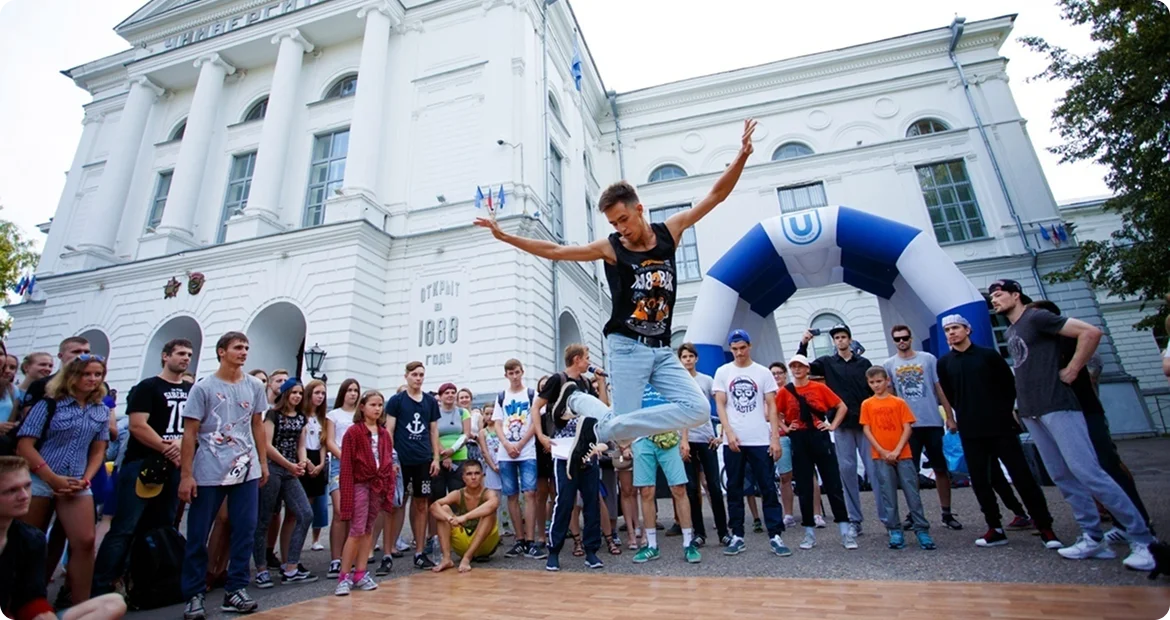
Students can also get involved in a variety of extracurricular activities, clubs, and communities that make university life even more enriching. These might include volunteer work, sports, participation in the student union, or creative pursuits like theater or music groups.
The choice is up to the student, and these activities offer great opportunities for personal growth. They also help international students quickly adapt to the new socio-cultural environment, make new friends, and explore their talents.
Popular professions
When choosing a university, applicants often rely on simple criteria: following in the footsteps of relatives, choosing a university where the coursework is not too difficult, or enrolling alongside friends. However, when speaking of education, the choice of country, university and field of study is influenced by way more factors.
Foreign applicants tend to prioritize factors such as the university’s success in training students in a specific field, its notable alumni, and the demand and high earning potential of the profession in their home country’s job market. It’s also important that the degree earned abroad is recognized in one’s home country.
For many years, foreign students in Russia have been particularly drawn to fields such as medicine (including clinical medicine and dentistry), information systems and technology, economics and management, international relations, pedagogy, and linguistics. Among engineering disciplines, the most popular are construction, mining, energy, and mechanical engineering.

You can learn about universities and areas of advanced training at the annual Russian education fairs held around the world.
Summing up rankings and alumni reviews, the most popular Russian universities include: PFUR University, St. Petersburg State University, Moscow State University, Tomsk State University, National Research University (НИУ) Higher School of Economics, Kazan Federal University, St. Petersburg Polytechnic University, and Tomsk Polytechnic University.
Opportunities after graduation from a Russian university
Working during and after studies
If a foreign student has a temporary residence permit for education purposes (TRPEP), they can apply for a permanent residence permit (PRP) within 3 years after receiving their diploma.
While still a student, you have the right to work with a study visa. After graduation, citizens of the EAEU can continue working, while students from visa-free countries should make sure to apply for a patent in advance if they plan to stay and work in Russia.
If you are from a visa-required country, you will need to begin the paperwork process at least a year before graduation to give your employer enough time to complete the necessary steps to hire you as a foreign worker.
Not everyone returns to their home country after graduating. On average, 7% of foreign graduates with a temporary residence permit (TRP) remain to work in Russia.

Industrial internship
In their 3rd or 4th year, students have the opportunity to complete an industrial internship. This involves working in an organization related to their field of study to gain deeper insight into the profession and a clearer understanding of what to expect in their future career. Often, students are placed in internships through referrals from the university or at the initiative of organizations seeking young professionals. It serves as a way to introduce students to the job market in the country.
Foreign specialists in Russia
Currently, most foreign graduates who have stayed in Russia after their studies have pursued careers in education and medicine. These fields attract highly qualified professionals, including young scientists. Other popular career paths for international students include IT and programming, engineering and technology, as well as economics and finance.
International career
Studying in Russia offers international students a unique chance to immerse themselves in Russian culture and adapt to life in the country, creating excellent opportunities for graduates to work in major Russian companies abroad. One example is “Rosatom” (Росатом).
Additionally, many Russian university graduates hold prominent positions in political and public organizations in their home countries, contributing to the development of their nation’s culture and economy, while maintaining strong ties with Russia.
Russia’s universities warmly welcome foreign students, offering high academic standards, affordable education, wide range of specialties, willingness to cooperate with international students, and communities of young people from around the world. Welcome to Russia!